
Step one
A free discovery call
Online, about thirty minutes, and we spend it working on something real of yours rather than talking about AI in general. You'll see whether it's worth your money before any of it moves.

Gloucestershire · online or in person
We spend it doing real work on something of yours. No charge, and nothing owed afterwards.
Set up on the tools you're already paying for
Most people I speak to have already tried AI.
It didn't stick, and that's not a you problem.
Nobody taught you how to use it properly.
AI should give people their time back so they can be more human, not more productive.
01 / 06
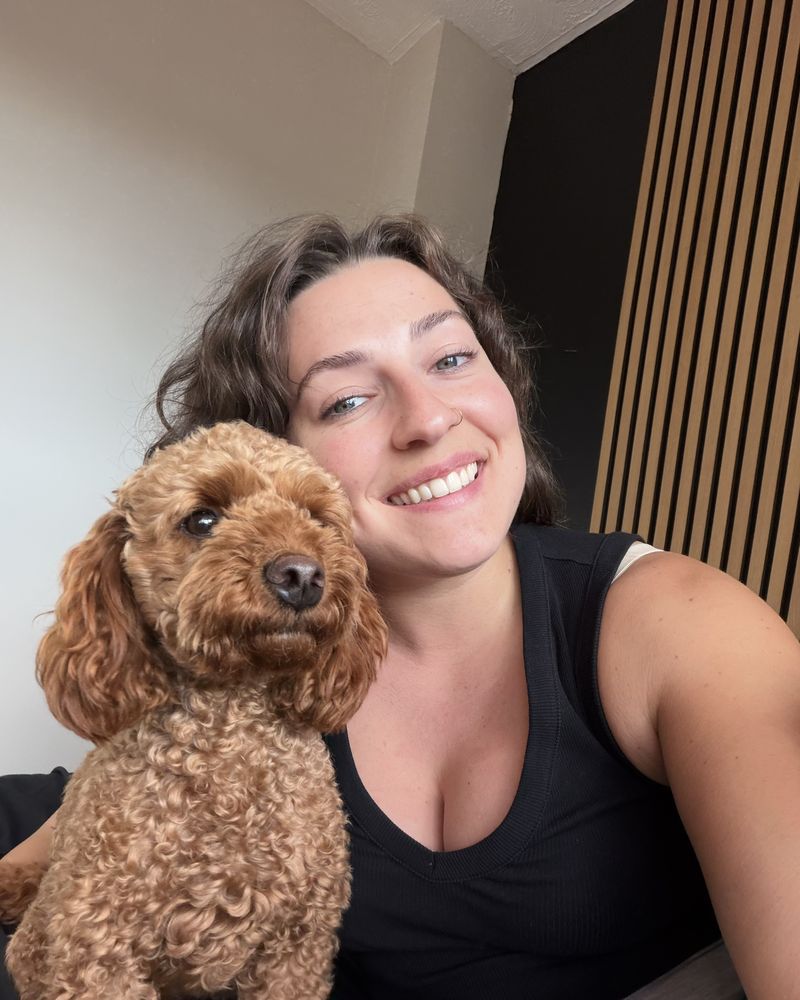

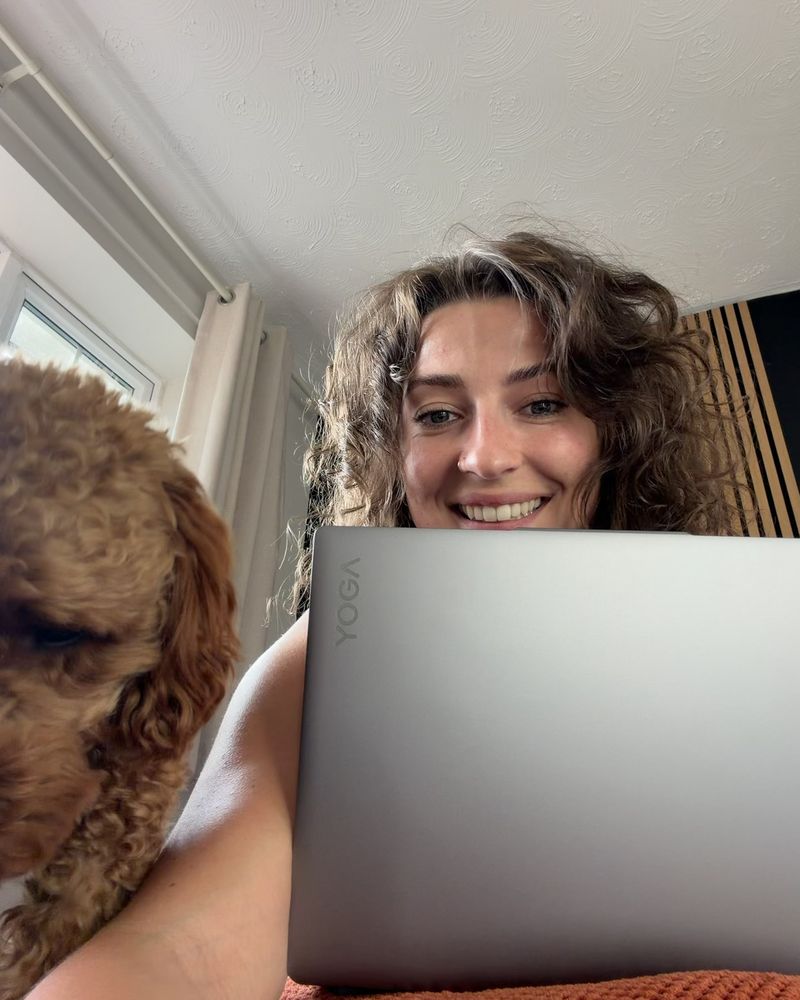



I'm Hannah. I run humAIn in the margins of a job that takes five days a week, so it gets built in the early mornings, the evenings and at weekends. When someone tells me they haven't got time to learn this, I'm not being sympathetic. I know exactly what they mean.
I also know what AI can give back, because it gave it to me first. I have ADHD, and it was never about working faster. It was about being able to start at all.
I didn't get on top of my own week by trying harder at the normal way of working. I rebuilt how I work so it fits my brain, with AI picking up the parts I didn't enjoy doing. That's the thing I now do with other people.
I've been coaching people since university. Rugby first, then schools, then community support, and now AI. It's the same job with a newer subject. I came to this from community work rather than from technology, and I've never sold anyone software.
I grew up in the Forest of Dean and live in Gloucestershire with my girlfriend and our dog Maple, who's in most of these photos. When I'm not working I've usually got my head in a book, or I'm training for HYROX.
humAIn won a Do Your Thing! award in March 2026, run by Start and Grow Enterprise at the University of Gloucestershire. I'm also the founder of Glos AIspire, Gloucestershire's first AI network for women.
02 / 06
Step one
Online, about thirty minutes, and we spend it working on something real of yours rather than talking about AI in general. You'll see whether it's worth your money before any of it moves.
Step two
We can do this online or in person, whichever is more convenient and works around your actual life. We look at how you work now, what you're already paying for, and what's eating your time.
Step three
In the evenings or early mornings, if that's when you've got time. You shouldn't have to take a day off to do this.
Step four
Whether you're one person, a business or a charity, the test is the same. You show me something you've made without me. If you can't, I come back for another session and I don't charge you for it.
03 / 06
I work with individuals, businesses and charities, and whoever you are, these are my non-negotiables. Without them the work doesn't stick, however good the sessions are.
One
You're the person who makes the decisions, or you can get one made quickly. Most of what we build needs a yes on the day, not after three weeks of waiting on someone else.
Two
I'll teach you to do it yourself rather than doing it for you. You don't need to be technical, but you do need to be up for trying things and getting a few of them wrong.
Three
Not loads, but some. Time to work out with me what we're doing, and time afterwards to look over what we've built and tell me what's wrong with it.
04 / 06
One engagement, one price, the same number for everybody. No day rate, nothing charged per head, and nothing that turns into a monthly subscription you then have to remember to review.
Start here · always free
Thirty minutes online, spent on your actual work. Your real emails, your real to-do list, your real work. You see it work on your own material before you decide anything, and if it turns out not to be for you, that's a perfectly good answer.
Book the callThen, if it's a fit
The promise: thirty days later, you show me something you made on your own. If you can't, I come back for another session and don't charge you.
Up and Running might not be what you're looking for, and that's fine. Book a call with me instead and we'll talk through what would suit you.
05 / 06
humAIn is for humans who want to use AI. Not one type of business, and not one type of person. If you want to learn how to use it properly and you'd like a human to help you, this is for you.
One person, a business or a charity. The door's open, and the price is the same.
Who it's for
Anyone who wants to learn to use AI on their own work. If you can say yes, you're willing to give it a go and you want to learn, you're in.
Who it's not for
Anyone hoping AI will replace a person, and anyone who wants to be frightened into buying something. I don't sell either.
“The future of work isn’t AI or human. It’s both.”
06 / 06
That's the most common thing I hear, and the fix is context. It doesn't know you, your work, how you talk, or the things you'd never say. Giving it that takes about twenty minutes, and it's most of what the first session is for.
No. If you can write an email you can do everything I'll show you. I assume nothing, and the people who get the most out of this are usually the ones who arrive most sceptical.
The ones you already have, usually Copilot, ChatGPT or Claude. None of them pay me, so if the free tier does the job I'll tell you.
We cover it properly at the start. The short version: never put anyone's personal information into a tool you haven't checked, and I'll show you how to check. A few settings and one good habit remove most of the risk.
Yes, one person counts, and the price is the same whether it's just you or a whole team. If £999 is a lot of money for you right now, say so on the call and we'll be honest about whether the timing is right.
That's what the call at thirty days is for. You show me something you've made without me, and if you can't, I come back for another session and don't charge you. Most of the time it stops sticking because it was never set up around your real week in the first place, which is where we start.
Yes. The words were co-written by me and AI, and every one of them was read, argued with and signed off by me. The website itself? 100% built by AI. I'm not technical and I have no idea how to code, but I do know how to ask AI.
Thirty minutes, online, spent on something real of yours. If it turns out not to be for you, you'll know by the end of it and you'll owe me nothing.
PS. If you've tried this before and it fizzled out, that's the single most useful thing you could tell me on the call. It's usually the fastest route to what will actually work for you.
I spent years in the voluntary sector, so if you're a charity, get in touch and we'll work out whether I'm the right person to support you. If I'm not, I'll signpost you as best I can.